
South Africa
When: 2024–2026
Purpose: Strengthen South Africa’s capacity to use OG-ZAF for long-run analysis of fiscal policy, social spending, structural reform, debt sustainability, and sustainable economic recovery.
Capacity development: UN DESA launched OG-Core project activities in Cape Town in August 2024 and held a second training workshop in March 2025. Participants worked on model structure, data integration, calibration, policy simulations, and interpretation. The training explored VAT increases, spending cuts, national health insurance, education and social development, distributional effects, international capital-flow shocks, productivity improvements, carbon tax options, pension changes, and debt sustainability.
2026 policy analysis: A policy brief published in June 2026 and a technical brief published in July 2026 use OG-ZAF to compare fiscal drag, a VAT increase, spending reprioritisation, and a combined package of fiscal measures and productivity-enhancing structural reforms. The model results suggest that fiscal measures alone can reduce debt but may also weaken consumption and leave growth close to stagnation. The combined scenario produces stronger results: GDP is 2.9% above the baseline, annual growth reaches about 3%, and public debt is 13.2% below the baseline over 2025–2044.
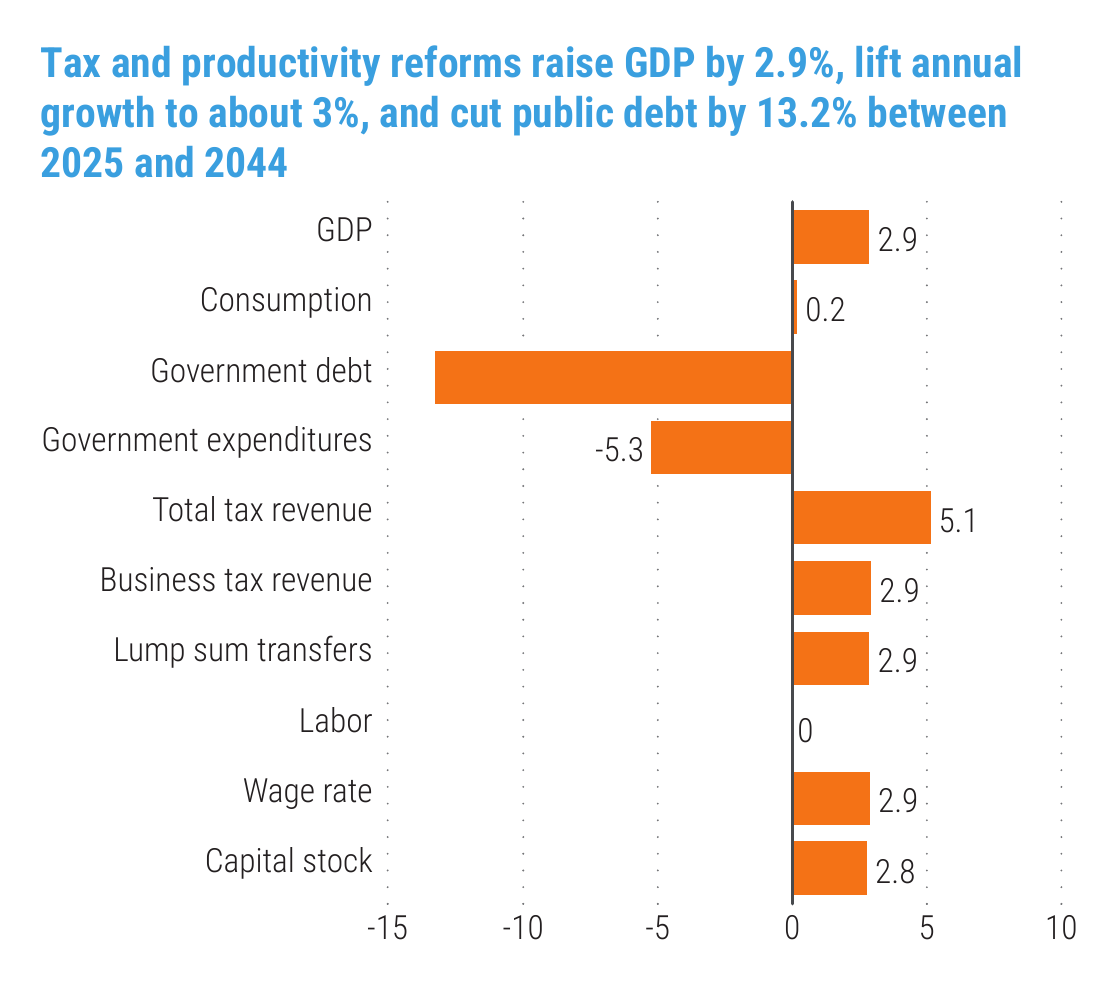
Key implications: The briefs recommend improving electricity reliability, rail and port infrastructure, and the regulatory environment; shifting more public spending toward well-governed investment; strengthening tax compliance and broadening the tax base before raising rates further; and using a transparent debt framework. The central message is that credible fiscal management and productivity-enhancing reforms should proceed together. All quantitative results are scenario comparisons, not forecasts.
Resources: Repository, model documentation, and training documentation.
Models: OG-Core
Stakeholders: UN DESA, National Treasury of South Africa, UN Resident Coordinator’s Office, Trade Law Centre (tralac), government agencies, academic institutions, Richard W. Evans, Jason DeBacker, and Marcelo LaFleur.